Article: Seed Oils in Skin Care: Separating Fact from Fiction for Healthy, Resilient Skin
Seed Oils in Skin Care: Separating Fact from Fiction for Healthy, Resilient Skin
Why This Conversation Matters
Seed oils are everywhere in modern skincare. They are often described as natural, lightweight, and nourishing, and are frequently promoted as essential for healthy skin. At the same time, growing skepticism around seed oils in nutrition has spilled into skincare, creating confusion, strong opinions, and conflicting claims.
This article aims to slow the conversation down and examine seed oils through a scientific lens. Not from fear, trend, or ideology, but from chemistry, skin biology, and risk management. The goal is not to demonize seed oils, but to explain why some brands, including VAER, choose not to use them, and why that decision is rooted in structure and stability rather than marketing.
VAER’s Position on Seed Oils
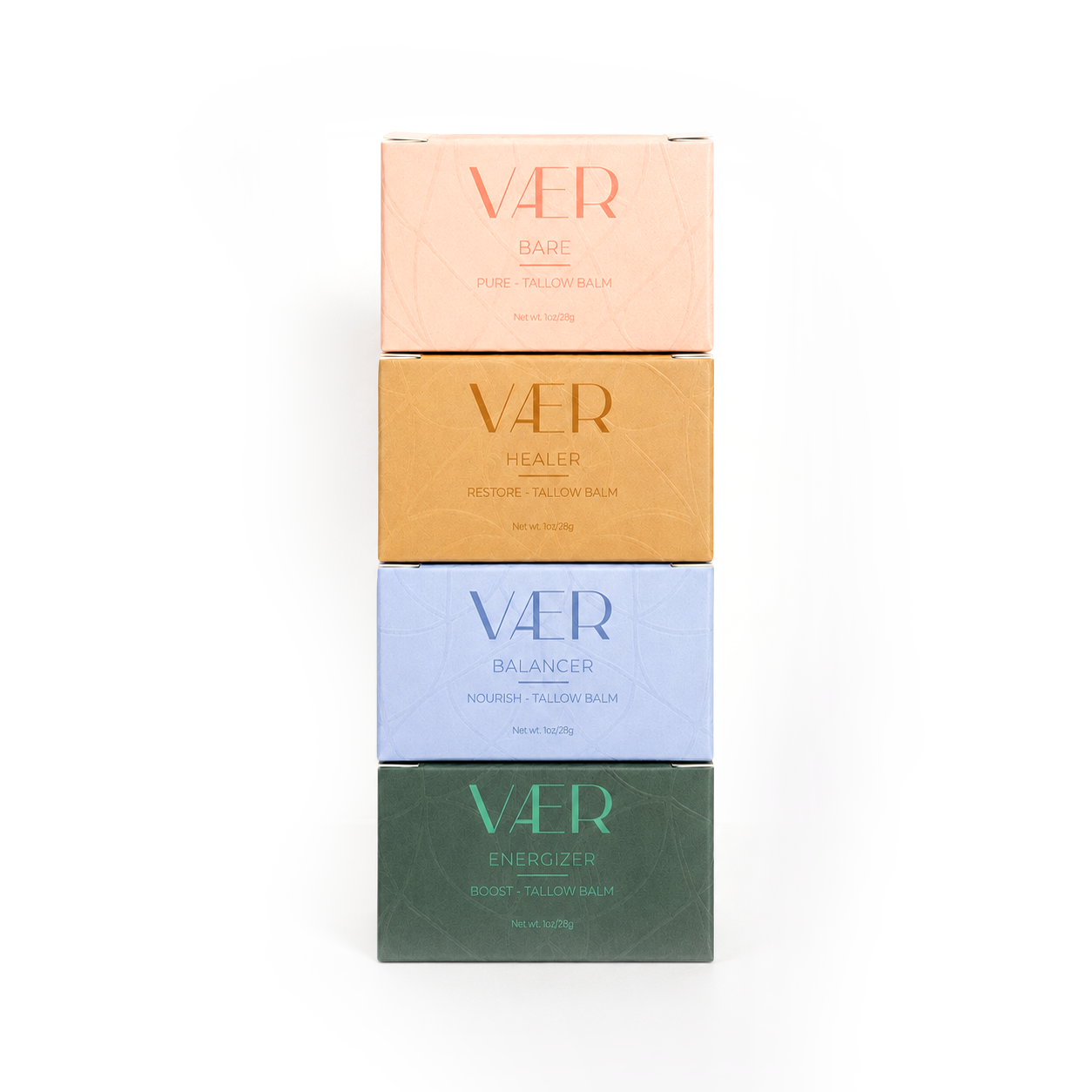
VAER chooses not to use seed oils in any form, including both cold-pressed and solvent-extracted varieties, because they are inherently high in polyunsaturated fatty acids. These fats are structurally unstable and more prone to oxidation when exposed to oxygen, light, heat, and daily wear on skin. While seed oils can feel light and absorb quickly, their multiple double bonds make them more likely to degrade over time, producing oxidation byproducts that may place unnecessary stress on the skin barrier.
This risk exists regardless of how gently an oil is extracted, as the underlying fatty acid structure does not change. Since stable, biologically compatible alternatives such as saturated and sebum-aligned lipids can deliver effective moisturization without this added instability, we see no reason to introduce avoidable risk. Our formulation philosophy is conservative by design: if the skin does not require it, and lower-risk options exist, we leave it out.
Understanding the Three Fat Categories in Skincare
To understand the seed oil debate, it helps to start with basic lipid chemistry. All oils are made of fatty acids, and their behavior on skin is strongly influenced by how many double bonds those fatty acids contain.
Saturated Fats
Examples: tallow, stearic acid, palmitic acid
Saturated fats contain no double bonds. Their molecular structure is straight and tightly packed, which makes them highly resistant to oxidation. In skin biology, saturated fatty acids play a structural role. They are stable under UV exposure, resistant to breakdown, and well suited to long-wear, leave-on products.
Monounsaturated Fats (MUFAs)
Examples: olive oil, avocado oil, jojoba (a wax ester, not a triglyceride)
MUFAs contain a single double bond. They are more flexible than saturated fats but far more stable than polyunsaturated fats. Many MUFA-rich oils feel smooth and cushiony on skin. Jojoba is a special case: it is composed primarily of wax esters that closely resemble human sebum and are exceptionally oxidation resistant.
Polyunsaturated Fats (PUFAs aka Seed Oils)
Examples: sunflower oil, safflower oil, grapeseed oil, corn oil, soybean oil, canola oil
PUFAs contain two or more double bonds. These double bonds create multiple weak points in the molecule, making PUFAs significantly more prone to oxidation. This structural fragility is the foundation of most concerns around seed oils in skincare.
Why Oxidation Matters on Skin
Skin is not a closed system. Lipids applied to the surface are exposed to air, light, heat, and UV radiation. Research in dermatology and photobiology shows that polyunsaturated lipids oxidize more readily than saturated or monounsaturated fats under these conditions.
When PUFAs oxidize, they do not simply lose freshness. They break down into biologically active byproducts such as lipid peroxides and aldehydes. These compounds are known to interfere with surrounding lipids, contribute to oxidative stress, and play a role in inflammation and photoaging pathways.
Antioxidants can slow this process, but they do not eliminate it. Once antioxidants are depleted, the underlying instability of the fat remains.
The Skin Barrier Favors Stability
Healthy skin barrier function depends on a highly organized lipid matrix composed primarily of ceramides, cholesterol, and saturated fatty acids. These lipids pack tightly, resist oxidation, and maintain water balance over time.
PUFAs are not dominant structural lipids in healthy skin. While linoleic acid, a PUFA, has been studied for short-term use in certain acne-prone or compromised skin states, these findings do not translate into a requirement for PUFA-dominant base oils in daily skincare. Therapeutic context and long-term formulation strategy are not the same.
Cold-Pressed vs Solvent-Extracted Seed Oils
A common claim is that cold-pressed seed oils behave differently on skin than solvent-extracted oils. While extraction method can influence minor compounds such as antioxidants, it does not change the core fatty acid profile of the oil. A cold-pressed sunflower oil and a solvent-extracted sunflower oil are both dominated by polyunsaturated fatty acids.
In other words, gentler extraction may preserve freshness, but it does not remove the structural susceptibility to oxidation. From a risk perspective, the instability remains.
Why Some Skin Types Appear to Tolerate Seed Oils
Many people use seed oil-based products without immediate issues. This is not surprising. PUFAs spread easily, absorb quickly, and can soften the skin barrier in the short term. These sensory benefits are often interpreted as proof of skin health.
However, softness and fast absorption are not the same as barrier resilience. In some cases, repeated use of highly unsaturated oils can increase reliance on frequent reapplication or contribute to sensitivity over time, particularly in environments with high UV exposure or in already reactive skin.
A Conservative, Risk-Weighted Conclusion
Seed oils are not poisons, and they are not universally harmful. But they are structurally fragile, and their fragility is relevant in long-wear, leave-on skincare.
When stable alternatives exist that align more closely with skin biology, the question becomes practical rather than ideological. Why rely on lipids that oxidize easily when saturated and sebum-aligned fats can moisturize, protect, and support the skin barrier with less risk?
That question sits at the core of VAER’s formulation philosophy. We do not avoid seed oils out of fear. We avoid them because we do not see a compelling reason to introduce avoidable instability into products designed to support the skin over time.